The Grant Application Process
With the charity formally established and our governance structure firmly in place, the next phase of our journey required both discipline and resolve. If the vision for restoring the Port Perry Grain Elevator was to move beyond aspiration, we needed to secure meaningful financial support—support that recognized the national importance of this structure and the responsibility required to restore it properly.
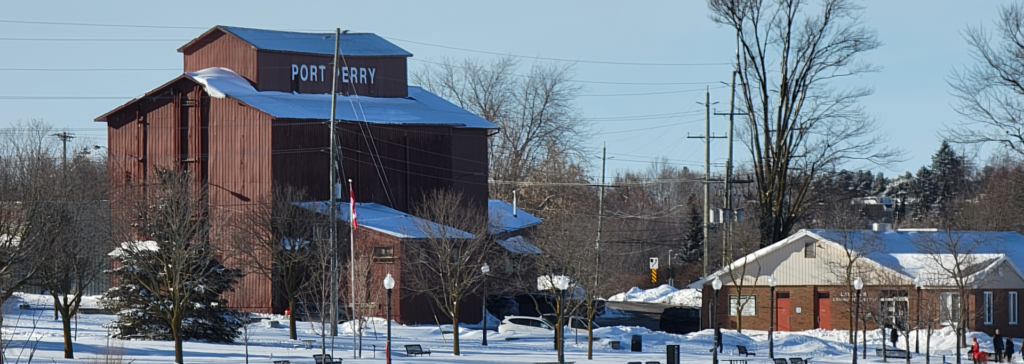
That opportunity came through the Government of Canada’s Building Communities through Arts and Heritage program, specifically under the Legacy Grant stream. The program exists to support communities marking significant milestones—100, 125, or 150 years—by helping preserve and celebrate the organizations, events, and historic structures that define their identity. In our case, the alignment was unmistakable. The Port Perry Grain Elevator, completed in 1875, represents not only a local milestone, but a rare and nationally significant agricultural artifact.
However, qualification alone does not guarantee approval.
The Document, Explained
The application process was extensive and highly detailed. The formal submission spanned 22 pages and required responses to 65 comprehensive questions. In addition, more than 30 supporting documents were prepared and submitted, including governance records, financial projections, engineering assessments, phased restoration plans, partnership confirmations, and documentation demonstrating community impact.
Every section required clarity, evidence, and accountability. We were asked to demonstrate not only historical value, but long-term sustainability. We were required to show financial stewardship, risk mitigation, community engagement strategy, and measurable public benefit. The application demanded that we articulate not just why the Elevator matters, but how its restoration would strengthen local identity, enhance tourism, support small businesses, and contribute to the broader Canadian heritage narrative.
Preparation for this submission took months. Restoration methodologies were refined. Cost estimates were reviewed. Fundraising strategies were formalized. Meetings were held with municipal representatives to ensure alignment and partnership structure. Because the Township of Scugog owns the building and our organization was less than two years old at the time of submission, the application required coordinated partnership between the municipality and Port Perry Grain Elevator Renovation and Revitalization Inc., with our charity serving as project lead.
The complete application package was submitted in February 2025.
What followed was a period of review, clarification, and further dialogue. Program representatives requested additional details in certain areas, and we responded promptly and transparently. The process was rigorous—as it should be when public funds are involved. Each exchange reinforced the seriousness of the undertaking and the responsibility we carry.
And Finally…
In December 2025, formal confirmation arrived from the Minister’s office. Our application had been approved.
The project was affirmed as one that serves the public interest—preserving a nationally significant structure, strengthening community identity, and creating a meaningful destination that benefits residents and visitors alike. The funding, provided in part through the Building Communities through Arts and Heritage – Legacy Grant Program, represents not only financial support but institutional confidence in the integrity of the project.
This milestone was deeply significant. It validated years of groundwork, careful planning, and disciplined preparation. It affirmed that the restoration of Canada’s oldest grain elevator is not merely a local ambition, but a contribution to the country’s shared heritage story.
We are sincerely grateful to acknowledge the support of the Government of Canada and the Building Communities through Arts and Heritage – Legacy Grant Program for their faith in this project and their commitment to preserving Canada’s historic places. Public investment of this kind reflects trust—trust that the funds will be managed responsibly, that the restoration will be executed with care, and that the community will benefit in lasting ways.
The approval of the Legacy Grant marked more than financial progress. It marked momentum. It signaled that the path forward was real, structured, and supported at the national level.
Most importantly, it brought us one step closer to ensuring that this 150-year-old landmark will stand proudly for the next century and beyond.